Bottom line: Real-time translation earbuds are genuinely useful in 2026, and you no longer need to spend hundreds to try the category. We have hands-on tested two budget models, the Monoise P-G2 and the UYUXIO translator earbuds, and the gap between them and the premium brands is smaller than the price gap. The traps to watch are subscriptions and network dependence, not translation quality.
Translation earbuds were a niche product a few years ago. They are now a real category with real users, and our hands-on testing gives us a concrete basis for this guide. We have spent weeks with the Monoise P-G2 and analyzed 25 real customer reviews of the UYUXIO translator earbuds, so this guide starts from what we actually verified.
The category is young enough that the marketing still outruns the products.
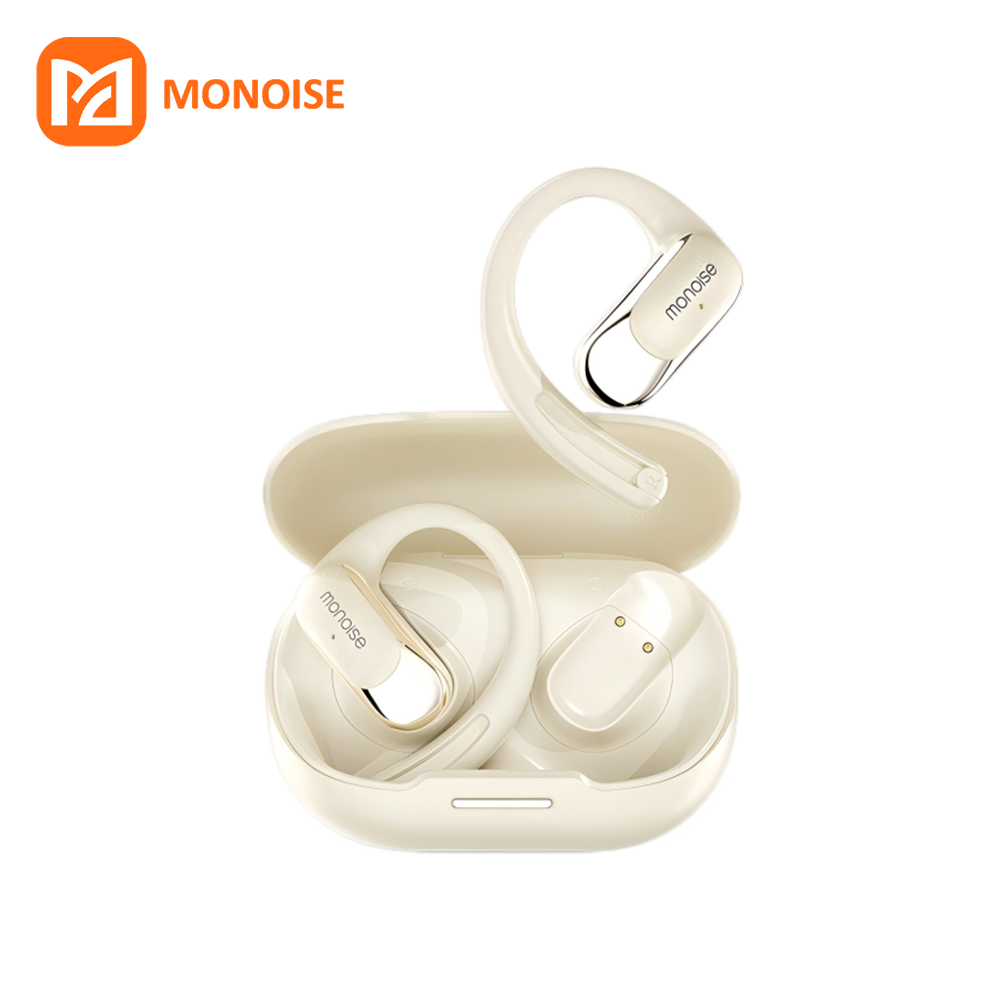
Product photo from the AliExpress listing. Every listing claims “100+ languages” and “real-time translation,” and the details that decide whether the product works for you live in the fine print. This guide is written to help you read past the marketing and check the things that actually matter.
What we tested
The Monoise P-G2 is an open-ear model that translates across a large number of languages and records meeting audio with transcription. We tested it in daily use for international customer calls, and it handled live conversation translation well enough to become a regular work tool. Battery life is around eight hours, which covers a workday. We rated it 4.2 out of 5.
The UYUXIO translator earbuds are a budget open-ear option supporting even more languages, based on 25 customer reviews we collected from the AliExpress listing. The translation itself gets consistently positive feedback, and the main complaints are practical: a paid subscription is required for the translation feature, the app setup is clunky, and the earbuds need a network connection to work.
Both are open-ear designs, which means they leave your ears open to the world. That is a feature for safety and comfort, and a limitation for noisy environments.
How translator earbuds work
Understanding the basics makes the buying decisions clearer. Translator earbuds do not translate on their own. They capture speech, send it to a translation service over your phone’s connection, and play the translation back. Three things follow from that.
The phone is mandatory. Without a connected phone, most models are just regular earbuds. Check that the model you want works with your phone’s operating system, and understand that translation stops when the connection drops.
The network matters. Cloud translation needs data, and quality drops or fails entirely on weak connections. Some models support offline translation for limited language pairs, which is worth seeking out if you travel to areas with poor coverage.
The subscription may be separate. Some listings price the hardware low and the translation service separately. This is the biggest trap in the category, and it is covered in detail below.
The buying traps
Subscription fees
The biggest trap in the budget category. Some earbuds advertise translation support, then require a monthly subscription to actually use it. The UYUXIO falls in this camp. Check whether translation is included in the purchase price before buying, because a $35 pair of earbuds with a $20-a-month subscription is not a $35 product.
Network dependence
Almost all translator earbuds need a phone connection and cloud translation. They stop translating when you lose signal. If you travel somewhere with poor connectivity, your translation earbuds become regular earbuds. Offline translation exists but is rare at this price.
Language coverage
Check the language list against your actual needs. “100+ languages” sounds impressive, but quality varies by language pair, and less common languages are often weaker. For daily work with one or two languages, a smaller list with better support beats a huge list with shallow support.
Two earbuds, one ear
Some models only translate when the other person wears the second earbud. That works for face-to-face conversations and fails for phone calls. If your use case is calls, check that the model handles phone call translation with just your earbuds.
Open-ear vs in-ear
Open-ear designs are comfortable for long wear and keep you aware of your surroundings, but they leak sound and struggle in noisy environments. In-ear designs isolate better and translate more reliably in loud places, at the cost of comfort over long sessions. Match the design to where you will actually use them.
Comparison table
| Monoise P-G2 | UYUXIO | Premium brands | |
|---|---|---|---|
| Price | ~$43 | ~$36 | Several times more |
| Design | Open-ear | Open-ear | Mixed |
| Translation | Included | Subscription | Included |
| Battery | ~8 hours | Varies | Varies |
| Based on | Our hands-on test | 25 customer reviews | Public info |
| Rating | 4.2/5 | 4.1/5 | Not tested by us |
What to check before buying
- Does translation require a subscription? Check the fine print.
- Does it work for phone calls, or only face to face?
- Open-ear or in-ear? Comfort and noise isolation are opposite trade-offs.
- Battery life. A workday needs at least six hours.
- Which language pairs matter to you, and does the model support them well?
- Does it work with your phone’s operating system?
The range of options
Budget models like the Monoise and UYUXIO start around $35 and cover the basics well enough for daily use, which is remarkable for the price. Premium dedicated translator earbuds cost several times more and add better build quality, more polished apps, and stronger support for major language pairs. And mainstream earbuds from Google and Apple now include translation features through their phones, which is worth testing before you buy anything dedicated.
Our honest recommendation. If you make international calls regularly and are on a budget, start with a budget model like the ones we tested, and verify the subscription question first. If translation is a core part of your business, the premium brands earn their price. And if you only translate occasionally, check what your phone and existing earbuds already do before spending anything.
FAQ
Do translation earbuds work without a phone? No. They need a phone connection for cloud translation. Without it, they work as regular earbuds.
Are subscription fees common? Common enough to check before buying, especially at the budget end. Some models price the hardware low and charge monthly for translation. Confirm whether translation is included before you order.
How accurate is the translation? Good enough for everyday conversation and business calls, based on our testing and customer reviews. Accuracy drops with accents, background noise, and less common language pairs. It is a conversation aid, not a certified interpreter.
Which is better, open-ear or in-ear? Open-ear is more comfortable for all-day wear and safer outdoors. In-ear isolates noise better for loud environments. Match the design to your main use.
Can they translate phone calls? Only some models. Check this specifically, because many models only support face-to-face translation with both earbuds worn. Our tested Monoise handles call translation in daily use.
How do I know which languages are supported well? Check the language list against your pairs, and look for reviews mentioning those specific languages. The headline count matters less than the pairs you actually need.
How this guide was written
This guide is based on our hands-on testing of the Monoise P-G2 and UYUXIO translator earbuds, plus 25 real customer reviews from the AliExpress listing. Products we have not tested are clearly marked as based on public information. See our best AI earbuds guide for the wider category.
Based on our hands-on testing of the Monoise P-G2 and UYUXIO translator earbuds, plus 25 real customer reviews. See our best AI earbuds guide for the wider category.