The three names people search for when they want an AI writer — Writesonic, Copy.ai and Jasper — have spent 2026 walking away from the thing that made them famous. Each began as a “paste a brief, get an article” tool with a free plan you could use indefinitely. As of October 2026, none of the three leads with a free tier you can run real work on. Writesonic now sells AI search visibility, Copy.ai leads with team workflows that start around $1,000 a month, and Jasper offers a trial rather than a plan. The free AI writer did not get worse; it moved to the general assistants — and that changes what “a Writesonic alternative” should mean.
What the free tier has become
A free writing tool used to mean two things: a monthly word or credit allowance, and a licence to use the output. Both have shifted. On the three tools below, the entry point is now a free trial — often no credit card, sometimes a week — that rolls into a subscription rather than sitting at $0 forever. The output licence follows the same line: paid tiers carry the commercial-use terms and the promise not to train on your text, while trial and free usage usually sits outside them. Before you paste a client brief anywhere, find the sentence about who owns the output and whether the model learns from it. That sentence, not the word count, is the real free-tier boundary in 2026.
The allowance you see advertised is also worth reading twice. Lines like “15 AI articles per month” are now paid features, sized for a team, not a taste of free use. The genuinely free widgets on these sites — an article generator, a headline tool — exist to collect an email.
Writesonic became a visibility tracker
Writesonic’s own site now calls itself an “AI Search Visibility Platform” that tracks how a brand appears inside ChatGPT, Gemini and Google AI Overviews. Its pricing starts at Starter (about $79 per month, billed annually), then Basic (about $199), Growth (about $399) and custom Enterprise; the cheapest plan bundles 15 AI articles a month with 50 tracked prompts and 10 site audits (writesonic.com/pricing). Writing is still in the box — it is just sold as the fix for a visibility problem rather than as a writing tool. There is a free trial, not a free plan, and the only permanently free items left on the site are utilities such as an llms.txt generator. If all you wanted was help with a paragraph, Writesonic now asks you to buy a marketing dashboard to reach it.
Copy.ai moved the copywriter upmarket
Copy.ai has gone further. Its pricing page is written for revenue teams, and the paid plans — Growth about $1,000 per month, Expansion about $2,000, Scale about $3,000, all billed annually — are measured in workflow credits, not words (copy.ai/pricing). The free plan that once handed out a couple of thousand words a month has gone. The nearest thing to an entry tier is a five-seat “Chat” plan with unlimited words across OpenAI, Anthropic and Gemini models, and a price the page does not print (check the official site). For a solo writer this is now the wrong-shaped tool: excellent if you are automating a sales process, oversized if you need a draft by lunch.
Jasper never really wanted to be free
Jasper sells a platform for marketing teams: Pro is about $69 per seat per month, or about $59 billed annually, and Business is custom-priced, with agents for GEO, translation and deep research at the top end (jasper.ai/pricing). There is a free trial and no free tier. Its pitch is consistency — brand voices, knowledge assets and audiences, so a team of writers sounds like one brand. That is a real problem worth paying to solve, but it is a team problem; a freelancer writing one blog post would be buying governance they never touch.
Three traps in any “free” writing plan
A trial is not a tier. A no-credit-card trial is genuinely generous, but it expires on a calendar, and the free generation quota inside it is a demo of the paid product, not an editor you keep.
The licence, not the word count, is the paywall. Free and trial usage frequently sits outside the commercial-use terms, and free accounts generally let the provider train on your text unless you opt out. Fine for a rough draft; a liability for a client’s launch copy.
The feature you actually need is the paid one. These platforms meter the part that saves time — tracked prompts, workflow runs, seats — while the visible part, a chat box or a template, looks free. The bill arrives somewhere you were not looking.
What still writes for nothing
The honest answer to “Writesonic alternative” in 2026 is a general assistant. ChatGPT’s free plan is available to everyone and gives unlimited everyday text chats on its current model, with limits on uploads, image creation, voice, deep research and memory, and the newest reasoning models reserved for paid plans (chatgpt.com/pricing). For drafting an article or tightening your own prose, that covers most of what the old free writing tools did — and it does not expire.
Claude’s free tier is the one to reach for when a long piece has to hold a single voice; its usage resets on a rolling window rather than a monthly quota, which suits one weekly article better than a daily content mill. Gemini’s free tier is the convenient choice if you already work in Google Docs, because the drafting and rewriting happen inside the document. Our round-up of free AI writing tools sets the whole $0 stack side by side.
For the narrower jobs, two specialists still do the work for nothing. QuillBot’s free paraphraser handles short passages in a few modes — enough to clear repetition from your own draft, not enough to restructure an argument, and our QuillBot alternatives guide maps exactly where that ceiling sits. DeepL Write rewrites and translates up to a per-request character cap, and it stays the safer pick when a client email has to be right in a second language. If you want the underlying tool, the ChatGPT tool page has the detail.
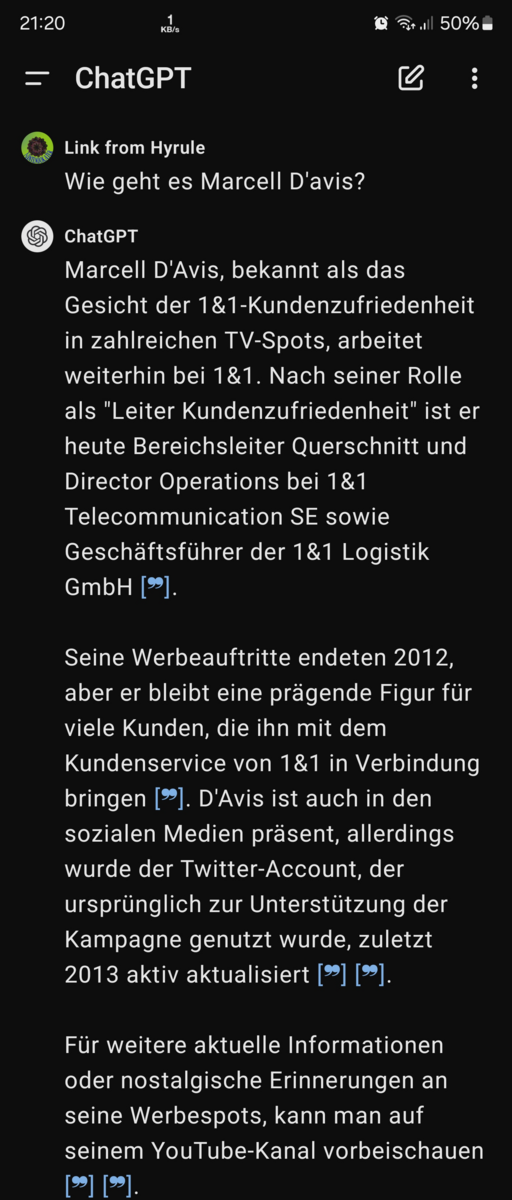
Screenshot of the ChatGPT interface via Wikimedia Commons (public domain).
The stack that costs nothing to run
A workflow that survives a real deadline: draft the whole piece in ChatGPT’s free tier in a single conversation so the voice holds. When the draft is done, run it through QuillBot to strip repeated words and tighten the clumsy sentences. If part of it has to reach someone in another language, hand that section to DeepL Write rather than a general model, which tends to flatten tone. Keep everything in one document so nothing is lost moving between the three.
Then draw the line. If you hit the same limit twice in a week — a token window closing mid-task, a rewrite you cannot finish — that is the signal to pay for one tool, not three. And if what you sell is the visibility an article creates rather than the article itself, the Writesonic–Copy.ai–Jasper tier is the one worth pricing; for everyone else, $0 still writes.
Free-tier details checked against official pages (writesonic.com/pricing, copy.ai/pricing, jasper.ai/pricing, chatgpt.com/pricing) on 15 October 2026. Prices change; confirm on the official site before paying.