One week in August 2026 compressed the whole AI hardware story into seven days: OpenAI announced its own inference chip, Amazon ordered two million more Nvidia GPUs, Arduino put a $299 robotics board on preorder, Plaud launched AI earbuds, and Hugging Face showed a rollerskating duck robot. Strip the names and the pattern is clear — compute is consolidating into a few giant hands while devices fragment into dozens of small bets. As of late August 2026, that split is the most useful frame for the category.
The past year, in five moves
The pin died, and the category regrouped. Humane’s $700 AI Pin was pulled from sale in early 2025 after HP acquired the company’s platform (The Verge, February 2025). The lesson every launch absorbed: live in devices people already wear.
Glasses and watches became the flagship vehicles. Meta’s Ray-Ban line kept compounding, Samsung confirmed AI smart glasses for 2026 (Android Headlines, January 2026), and Google’s Pixel Watch 5 shipped with offline Gemini and health-AI features (TechCrunch, The Verge, August 12, 2026). Our AI Glasses in 2026 maps the lineup; camera-plus-assistant won.
The chip race went vertical. OpenAI announced its own inference chip, “Jalapeño” (The Verge, August 2026); Amazon expanded its Nvidia buildout by two million GPUs; Nvidia posted another record quarter. Whoever controls the silicon controls the economics of AI.
Edge AI crossed a price threshold. Arduino and Qualcomm opened preorders for the Ventuno Q, a $299 board that runs vision, speech, and sensor models fully offline on a 40-TOPS processor (The Verge, August 2026). Last year that was not realistic at the price.
Audio quietly became the default AI form factor. Plaud launched AI earbuds (The Verge, August 2026), and translation earbuds went from novelty to commodity — useful pairs now sit around $35–45.
What the 2026 stack lets you do today
Run real AI without a network. Boards like the Ventuno Q, plus phone NPUs that double each generation, make local inference a practical default. Nvidia’s DGX Spark pushed the same idea onto the desktop (The Verge) — privacy and speed for users, shippable hardware for builders.
Translate and summarize in your ears. The one corner we can vouch for from hands-on use: the Monoise P-G2 earned 4.2/5 in real foreign-trade call testing, and the budget UYUXIO pair scored 4.1/5 across 25 customer reviews in our best AI earbuds comparison — usual catch: translation often needs a paid subscription and a live connection. Higher up, the Sony XM6’s AI meeting summaries survived our 45-minute mixed-language call test.
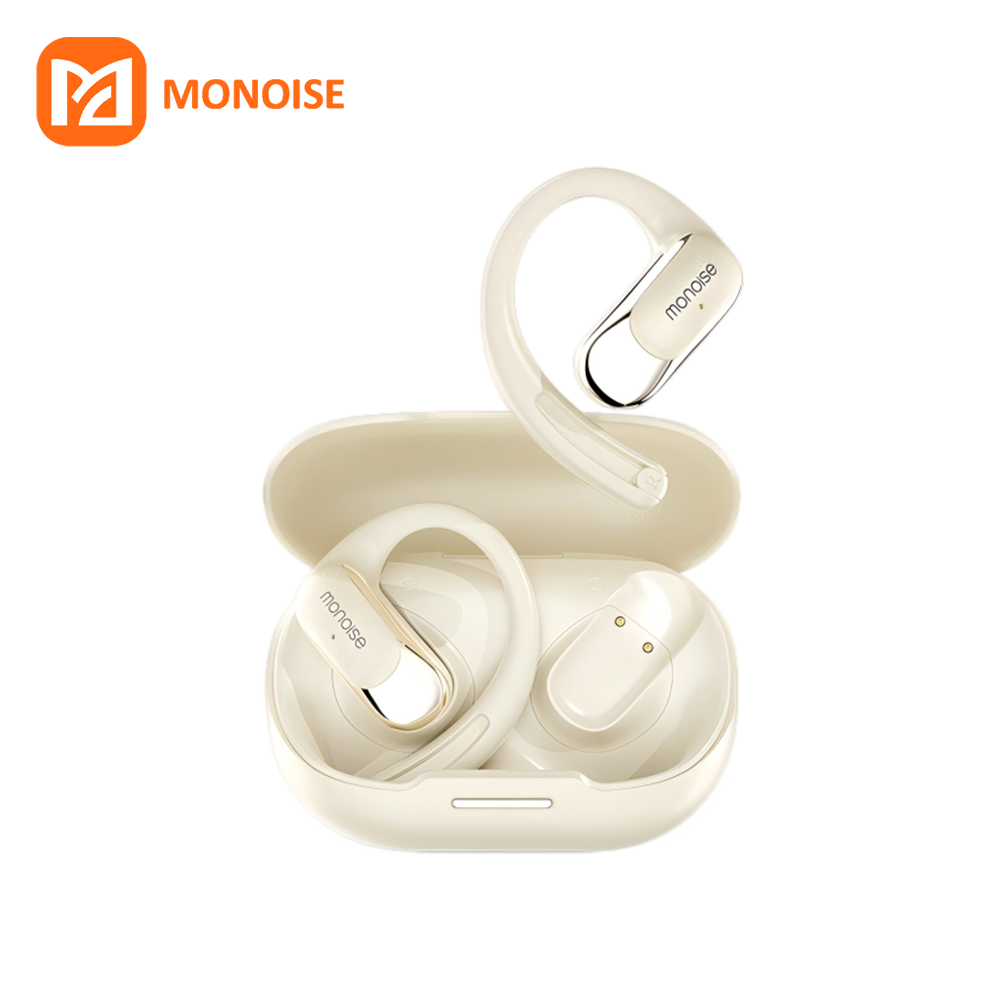
Product photo from the AliExpress listing.
Capture hands-free. Camera glasses are a settled, almost boring product — exactly what you want. The third-generation Ray-Ban Meta line shoots photos and video by voice or button, with audio good enough for calls. The privacy tension is real and unresolved, but the hardware works.
Buy a robot for the price of a phone. The DOGZILLA-Lite — about $718, with a Raspberry Pi controller, 5MP camera, and robotic arm, per our spec breakdown — costs about as much as a midrange phone. Hugging Face’s duck-shaped MicroDuck (The Verge, August 2026) shows how playful the hobby end has become.
Three trends worth watching — and which parts are guesses
Custom silicon keeps pushing inference costs down. Fact: OpenAI, Google, Amazon, and Nvidia are all building or buying chips. Extrapolation: cheaper inference pulls AI features into cheaper devices. Direction solid; speed is the guess.
The earbud wins the wearable race. Fact: Plaud’s entry and the translation-earbud commodity wave both point at ears. Guess: big audio brands fold assistant layers into their flagships — the Sony XM6 pattern we tested — until “AI earbuds” just becomes earbuds. A judgment, not a reported event.
Personal AI computers find their buyer. The DGX Spark class runs real models locally on a desk. Whether non-developers pay is open; our read: the second generation will tell.
Who should act on this now
Work across languages? Translation earbuds are the year’s clearest AI-hardware buy — our tested picks start around $35; verify the subscription first. Create content? Camera glasses work today once you accept the privacy trade-off. Tinker? A $299 edge board is the cheapest way to prototype on-device AI. Waiting instead? Display glasses and personal AI computers are the two lines to watch.
FAQ
Is AI hardware in 2026 mostly hype? It splits by line: translation earbuds, camera glasses, and edge boards do real jobs today; display glasses and personal AI computers are still early.
What is the single biggest trend? Compute consolidating while devices fragment — the same week brought OpenAI’s chip, two million more Nvidia GPUs for Amazon, and a $299 hobby board.
Should I buy now or wait? Buy for translation, hands-free capture, or prototyping. Wait for display glasses or a mature personal AI computer.
Sources
The Verge, AI section, August 2026 (OpenAI “Jalapeño” chip; Plaud AI earbuds; Arduino Ventuno Q; Hugging Face MicroDuck; Nvidia DGX Spark; Amazon’s two-million-GPU expansion); The Verge on Humane’s AI Pin (February 2025); TechCrunch and The Verge on the Pixel Watch 5 (August 12, 2026); Android Headlines on Samsung’s AI glasses (January 29, 2026); our reviews of the Monoise P-G2 and Sony XM6, our UYUXIO analysis, and our DOGZILLA-Lite spec breakdown. All accessed August 2026.
Related: AI Industry Weekly (August 6) · AI Glasses in 2026