The free layer of AI tools has quietly turned into a product line of its own. Two years ago “free” mostly meant a metered demo you were expected to outgrow. In 2026 it means a deliberately shaped offer — capped somewhere, sometimes ad-supported — managed by the biggest labs the way airlines manage economy class.
Here is the honest summary as of mid-September 2026: you can do most everyday knowledge work for $0, you cannot do it at scale, and the thing that finally pushes people to pay is almost never answer quality. It is the caps around the chat window — uploads, memory, files, agents, exports.
The specifics below come from official pricing and help pages checked in September 2026 (OpenAI, Anthropic, Google, DeepSeek, Suno, ElevenLabs, Canva, GitHub, xAI), plus our own 14-day head-to-head of ChatGPT, Claude and Gemini. Where something is a judgment rather than a reported fact, I flag it.
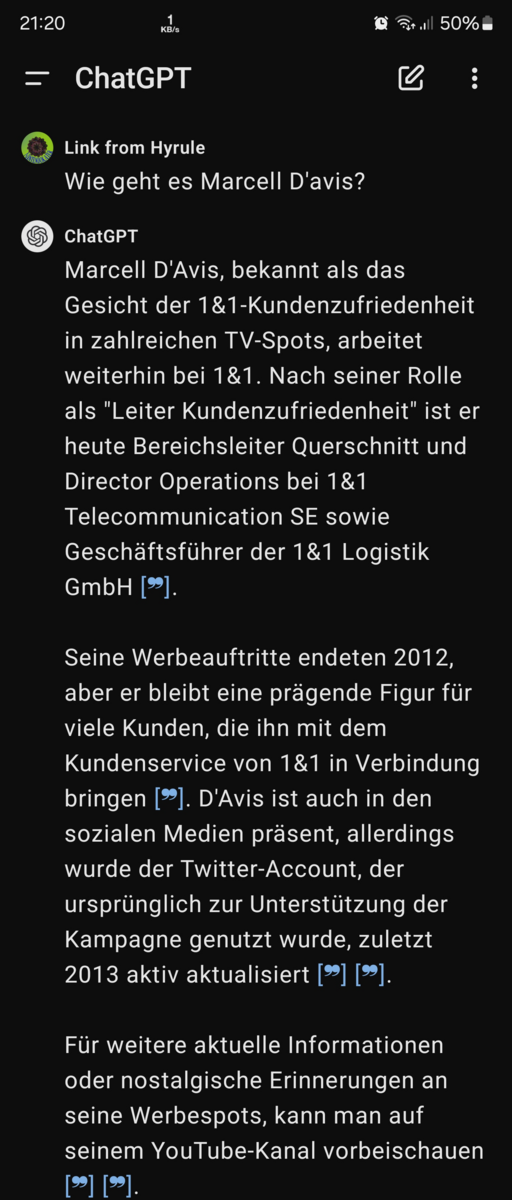
Screenshot of the ChatGPT interface via Wikimedia Commons (public domain).
The year the free layer acquired an economics lesson
Walk the timeline and the pattern is hard to miss: free got better as a product and tighter as a promise.
Ads arrived. OpenAI began testing ads on ChatGPT’s Free and Go plans in the US on February 9, 2026, while Plus, Pro, Business and Enterprise stayed ad-free (help.openai.com/en/articles/20001047). That is the clearest sign yet that the free tier is being financed like a media product rather than treated as a funnel.
The paid ladder grew a rung. OpenAI now sells Free, Go, Plus and Pro (openai.com/chatgpt/pricing). The split is telling: Free keeps unlimited text chats on GPT-5.6 Luna, while the newest reasoning model, GPT-6 Astra, sits one rung up on Plus. Everything wrapped around the chat — uploads, voice, image generation, deep research, memory, Codex, Work — is listed as limited on Free.
Anthropic went the other way. Claude’s free plan now includes web search, file creation, code execution, memory across conversations, app connectors and Artifacts (anthropic.com/pricing). Two years ago that list would have read like a paid tier. Claude Code, Design, Slides and Docs remain Pro features, but the workbench itself costs nothing.
Perplexity moved subscription-first. The free tier still works — a daily cap on pro searches, unlimited base-model searches — but the era of taking a fully free research engine for granted is over, as we noted in the Perplexity vs ChatGPT comparison.
DeepSeek kept chat paywall-free. The current release, DeepSeek-V4.1-Flash, added native multimodal understanding to the company’s earlier agent and coding work (deepseek.com). For heavy text use it is still the closest thing to an unlimited free assistant.
Music and audio tightened. Suno’s free plan now lists no monthly song downloads at all after the September 3, 2026 cutoff (suno.com/pricing). ElevenLabs still grants 10,000 credits a month, roughly ten minutes of speech, with paid tiers from about $6 (elevenlabs.io/pricing).
Google and Microsoft kept the entry level deep. Gemini still offers the most generous free allowance of the big three, and Google shipped Gemini 3.8 Flash plus a 3.8 Live voice mode in September (blog.google). Microsoft’s Copilot Free now reaches the CLI and agent mode, not just chat (github.com/features/copilot/plans), and xAI pitches Grok’s $0 tier as working “within generous limits” (x.ai/pricing).
What $0 covers now, job by job
Everyday writing and reasoning
ChatGPT Free is the baseline: unlimited text on GPT-5.6 Luna is genuinely enough for drafting, rewriting, explaining and translation. Claude Free is the one to reach for when the prose matters more than the speed, and its free plan is unusually complete for a Western assistant. For pure reasoning volume, DeepSeek’s V4.1-Flash costs nothing and does not meter chat. The practical answer for most people is to keep one of these as a default and stop worrying about which one wins a benchmark — our own comparison found the free tiers diverged far more on allowances and file handling than on general answer quality.
If you want the single-tool view of OpenAI’s product, our ChatGPT tool page is the short version.
Research with receipts
Perplexity is still the only mainstream free option whose answers arrive with numbered sources, which is why it survives on a research desk even with a daily cap on pro searches. Gemini’s free tier is the better everyday companion if your life already lives in Google — pulling figures from Drive or summarising a thread works without a card on file. ChatGPT’s deep research is more capable on paper but explicitly limited on Free, which makes it a paid feature in practice. The realistic free research stack is Perplexity for sourced first passes, one assistant for follow-up reasoning.
Official Perplexity homepage image.
Images and design
This is where free tiers squeeze hardest. ChatGPT Free includes image generation but caps volume and speed; Gemini folds image features into its free allowance; Canva Free gives up to 20 Standard or Premium AI uses before the meter bites (canva.com/pricing). For volume work, open-weight image models and the free tiers of Ideogram or Leonardo remain the usual escape hatch. The thing to check before you rely on any of them for a client project is licensing, not quota.
Voice, music and audio
ElevenLabs’ 10,000 free credits a month is the number most people start from, and Suno’s 50 daily credits still let you experiment — but the no-downloads change means free Suno output is now something you listen to inside the app rather than ship. Our free AI voice generator guide found that the decisive difference between free audio tiers is rarely quality; it is whether the licence lets you monetise the output and how the quota is actually counted.
Code
GitHub Copilot Free is the easiest on-ramp because it now includes CLI and agent mode, though every one of those surfaces draws on the same AI credit pool. ChatGPT Free gets only limited Codex access. If you want unlimited coding help without a subscription, the honest free route is an open-source harness like Aider or Cline pointed at your own API key — no monthly fee, but you pay per token and you own the setup.
Self-hosting: the free tier nobody advertises
Open-weight models are the real unlimited plan. A gpt-oss-class model, a Llama or a Qwen build will run on a decent laptop or a rented GPU and never ask you to upgrade. The catch is not subtle: you supply the hardware, the setup and the maintenance, and you trade some quality for it. But it is the only version of “free AI tools like ChatGPT” that no company can revise next quarter.
Three shifts worth watching
None of these are predictions I would bet a business on, but the direction of travel is clear from the last year.
The free tier is becoming an ad product. OpenAI’s test is live and the Go plan already carries an “may include ads” label. If ads work in the US, expect the model to spread and expect a second, cheaper ad-supported tier to appear alongside the ad-free paid ones.
The paywall is moving from the model to the memory. Free tiers increasingly hand you a strong chat model and gate the things that make it useful at work — long memory, file handling, agents, exports. The differentiator a year from now is unlikely to be which model answers you, but how much of your context it is allowed to keep.
Open weights keep closing the gap from below. Every open release puts more pressure on paid tiers to justify themselves, and it is the main reason free plans have improved at all. It is also the reason “free” is not a safe long-term strategy for any single vendor-dependent workflow.
Who gets the most out of $0
A person who uses AI for email, drafts, summaries and the occasional spreadsheet analysis should not be paying anyone. ChatGPT Free or Gemini Free, plus Canva Free for visuals, covers that working week comfortably.
Writers and editors should add Claude Free and treat it as the drafting desk. Researchers should keep Perplexity for sourced work and one assistant beside it. Developers who code for a living will hit Copilot’s credit pool quickly; the question is whether their employer pays or they run open-source tooling on an API key.
Heavy daily users, teams, and anyone whose work depends on long context or file pipelines should pay — not because the free models are weak, but because the caps are exactly where professional work happens. Our wider free AI tools roundup is the place to start if you are assembling the paying version of this stack.
Anyone tempted to switch defaults because a leaderboard moved should not. The free alternatives win on specific jobs — sourced research, long-form editing, uncapped reasoning — not on being better overall than ChatGPT.
Questions people keep asking
Are free AI tools like ChatGPT actually free? Yes, in the sense that you can use them indefinitely without a card. No, in the sense that they are unlimited. Every free tier here is capped, and some now carry advertising.
Which free tool feels most like ChatGPT? Gemini for everyday use, Claude for writing, DeepSeek for volume. If you literally want the same product without paying, ChatGPT Free is still there — it is the features around the chat that are limited, not the chat.
Is there any unlimited free assistant? Only the one you run yourself. DeepSeek is uncapped for text chat but still enforces abuse guardrails, and no hosted free tier is unlimited across images, voice and agents.
Will these free tiers stay free? Some will get better, some will get ads, and at least one will tighten again this year. The only guarantee worth building on is that no free tier is a promise.
Where this leaves you
The free layer in 2026 is good enough that most people should start there and stay there until a specific limit — not a headline about a new model — makes them pay. Pick one general assistant, add a specialist for the job you do most, and treat every free tier as a rental rather than a foundation. Our guide to free ChatGPT alternatives goes deeper on which one to pick if you have not settled yet.
Prices, allowances and plan features were checked against openai.com/chatgpt/pricing, help.openai.com/en/articles/20001047, anthropic.com/pricing, deepseek.com, suno.com/pricing, elevenlabs.io/pricing, canva.com/pricing, github.com/features/copilot/plans, blog.google and x.ai/pricing in September 2026. Free plans change often — verify on the official site before relying on one for anything important.