The biggest change in AI wearables over the past year is not any single device — it is that the category stopped pretending to be one. Twelve months ago, “AI wearable” mostly meant a gadget with a screen, an assistant, and a pitch. As of August 2026, it means three separate product lines — glasses, earbuds, watches — each with a different maturity, a different buyer, and a different set of things that actually work. The honest summary: the pin form factor is dead, the boring form factors won, and the most useful devices are the ones that solve one specific job instead of promising to replace your phone.
This guide draws on public reporting and our own hands-on testing, with sources named where we repeat a manufacturer’s claim or another outlet’s report. Prices are approximate as of August 2026 — check official sites before buying.
The past twelve months, in four events
Start with the cautionary tale. Humane’s AI Pin — a $700 wearable whose entire pitch was replacing the phone — was pulled from sale in early 2025 after HP acquired the company’s platform. The lesson: nobody wants a new screen strapped to their chest; they want the devices they already wear to get smarter. Every meaningful launch since has followed that logic.
August 2025 — Meta’s Ray-Ban line kept compounding. The current Ray-Ban Meta glasses carry a camera, open-ear audio, and Meta AI in the frame, with a display version shown as the next step. We covered the trajectory in our AI glasses market piece; the short version is that the camera-and-assistant formula became the category’s default template.
January 2026 — Samsung made AI glasses official. Samsung confirmed AI-powered smart glasses for 2026, describing multimodal experiences for everyday wear (Android Headlines, January 29, 2026). Follow-up reporting added the shape: a camera, transition lenses, and assistant support, with a display-equipped HUD model expected later (Digital Trends). Full specs and pricing were not confirmed, so treat those as TBD.
August 12, 2026 — Google’s Pixel Watch 5 turned the wrist into a health-AI device. Announced at Made by Google, the watch starts at $399 and adds offline Gemini (timers, alarms, workouts by voice with no network), a “Health Guardian” suite that tracks blood-pressure patterns and insulin-resistance trends, and breathing-emergency detection that can contact emergency services (TechCrunch, The Verge, August 12, 2026). It ships August 20 — the clearest signal yet that the AI watch story is now about health data, not notifications.
And in between, translation earbuds became a commodity. The most useful AI wearable of the year, measured by price-to-value, never got a keynote — the category now starts around $35.
What you can actually do with one now
The practical way to read this category is by job, not by device. Four jobs are worth your attention in August 2026.
Translation: the use case that finally works
This is the one feature we can vouch for from daily use, not speculation. The Monoise P-G2 is an open-ear earbud that translates across a large language set (115 per the listing) and records meetings into text; we rated it 4.2/5 after wearing it through real foreign-trade customer calls. At around $43 it pays for itself in the first week of international work, the open-ear design kills ear fatigue, and battery life of about eight hours covers a shift.
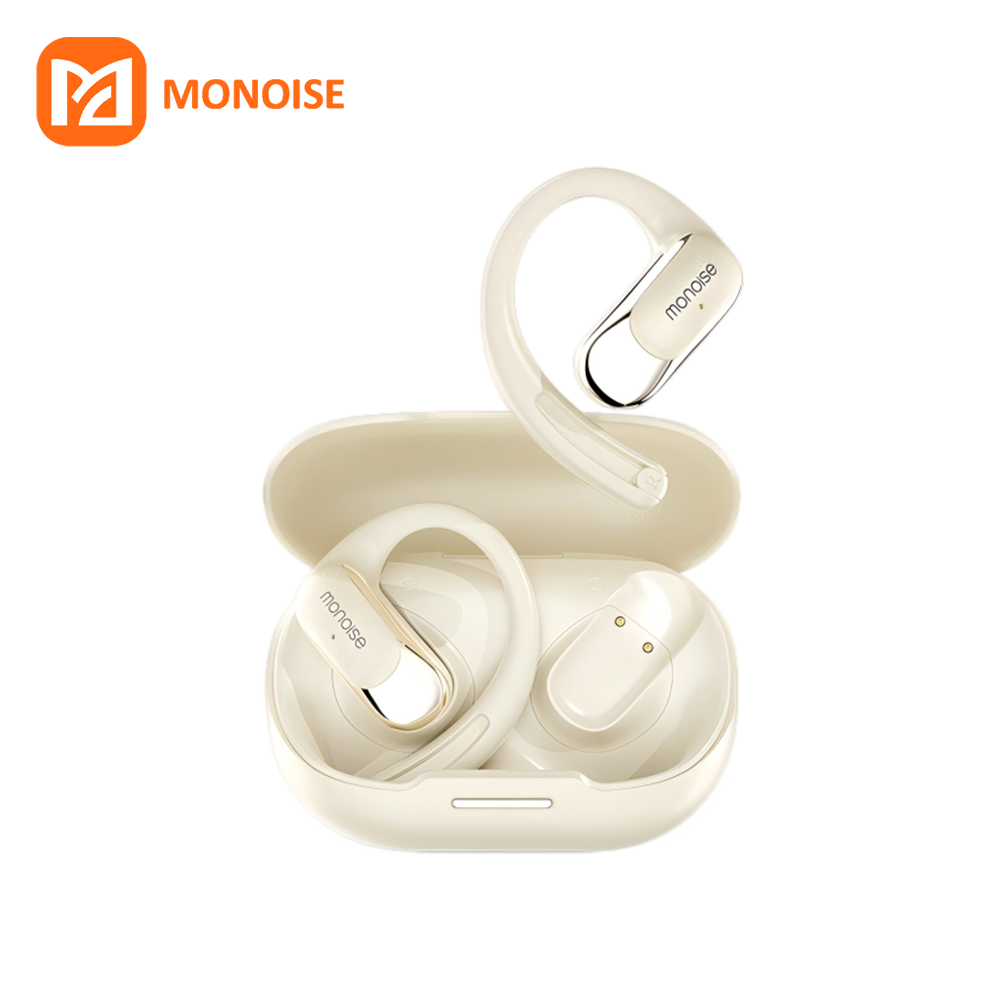
Product photo from the AliExpress listing.
The budget end is real but has a catch. The UYUXIO translator earbuds, around $36, score 4.1/5 in our analysis of 25 customer reviews from the AliExpress listing — translation quality gets consistent praise, but the translation feature requires a paid subscription and a network connection. That pattern (cheap hardware, subscription software) is the main trap in the category, and our AI translator earbuds buyer’s guide walks through what to check before ordering. Our full best AI earbuds comparison covers both tested pairs side by side.
Capture: the camera on your face
Camera glasses are the category’s other genuinely working job. Current Ray-Ban Meta glasses take photos and short videos from your point of view by voice or button, and the audio quality is good enough for calls and music. For creators it replaces the phone-in-hand shot; for parents, it is the hands-free camera that actually gets used. The honest limits: most models still lean on your phone for heavy AI lifting, and the privacy question is not going away — a camera on your face makes other people uncomfortable. Our AI glasses market overview covers the lineup and the concerns in full.

Photo: Phillip Pessar, CC BY 4.0, via Wikimedia Commons.
Health: sensors meet language models
The Pixel Watch 5 is the most ambitious health-AI wearable to ship so far (TechCrunch, August 12, 2026). Its blood-pressure feature tracks patterns rather than spot readings and was validated against 24-hour monitors; Google says the underlying model was trained on more than 1 billion minutes of data from over 500,000 people. The insulin-resistance feature combines sleep, heart rate, and activity signals to flag changes associated with prediabetes or type 2 diabetes risk, with a monthly trend summary. Sleep-stage tracking is claimed to be 15% more accurate, and “Smart Wake” times alarms to your sleep cycle.
The important caveat: these are wellness signals, not diagnoses. A watch that flags a trend is useful for a conversation with a doctor, but it is not a medical device. The one feature that does escalate — breathing-emergency detection that contacts emergency services — is launching in select European countries first, which tells you how carefully regulators are watching this space.
Assistant: on the wrist, in the frame, in your ears
The quiet shift of 2026 is AI moving onto the device itself: offline Gemini on the Pixel Watch 5 handles timers, alarms, and workouts with no network. In glasses, the assistant is still mostly a remote control for your phone’s AI rather than a standalone brain.
The interesting middle ground is audio. The Sony XM6 is a flagship noise-cancelling headphone rather than a dedicated AI wearable, but its AI meeting summaries held up in our testing: in a 45-minute mixed Chinese-English call, it auto-categorized agenda, conclusions, and action items accurately enough to skip manual notes. At about ¥2,999 in China (check your local Sony site) it is roughly 70 times the Monoise’s price — you are paying for the AI layer on top of best-in-class hardware. The pattern is the point: AI assistance is becoming a feature of good audio gear, not a separate product.
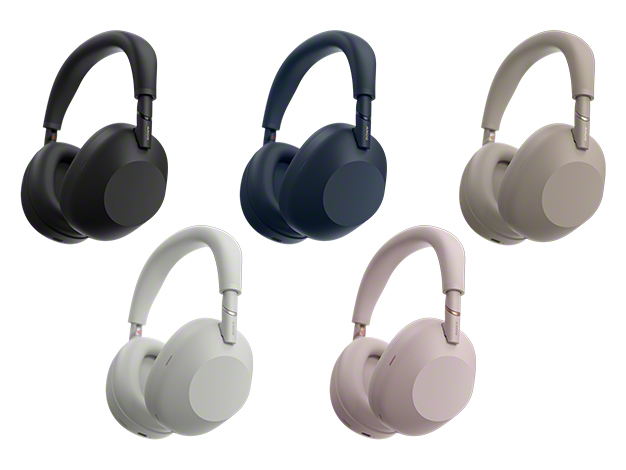
Official product image from Sony (sony.jp).
Three directions worth watching
These are judgments, not predictions — two are based on products that already ship, one is mostly industry reporting, and we are labeling them honestly.
| Direction | Where it stands (as of Aug 2026) | Our read |
|---|---|---|
| Display glasses | Meta has shown an in-lens display version; Samsung’s HUD model is reported for later | The first generation will be expensive with rough edges. Unless you are an early adopter, the second generation is the safer buy — our guess, not a fact |
| On-device AI | Offline Gemini ships on the Pixel Watch 5; translation features are starting to run locally | Expect more wearable features to work without a network as chips allow. Battery and heat will decide how far this goes |
| Clinical-adjacent health AI | Blood-pressure patterns, insulin resistance, emergency detection are shipping | Accuracy and regulation will determine how much survives. Treat current features as signals, not diagnoses |
One more signal: the same AI-hardware wave is reaching kids’ rooms. Our spec breakdown of the DOGZILLA-Lite robot dog — around $718, with a Raspberry Pi controller, 15 degrees of freedom, a camera, and a robotic arm — sits in that neighborhood, and our AI toy buying guide separates learning tools from gimmicks. It is not a wearable, but it is the same story.
Who should buy now
If you talk to people in other languages for work — buy translation earbuds now. This is the clearest return on investment in the category, and our tested picks start around $35–45. Verify the subscription question before you order.
If you make content or want hands-free capture — camera glasses are worth it today if you accept the privacy trade-off. Want information in your field of view instead? Wait for the display generation.
If you care about health data — the Pixel Watch 5 class of device is genuinely new territory, but buy it as a wellness tracker that informs your doctor conversations, not as a diagnostic tool.
If you are a privacy skeptic or waiting for AR — nothing in 2026 will convince you, and that is a defensible position. The display generation is when the category changes again, and its first version will have rough edges.
If the buyer is a kid — the AI toy category is the wearable-adjacent option, with the same caveats about age fit and privacy covered in our AI toy buying guide.
FAQ
Are AI wearables actually useful in 2026, or still hype? Both, depending on which line you mean. Translation earbuds and camera glasses do real jobs today — we have tested both. Health AI on watches is promising but unproven as medicine. Display glasses are mostly still promises.
Do AI wearables work without a phone? Mostly no. Glasses and earbuds lean on your phone, and translation earbuds stop translating when the connection drops. The Pixel Watch 5’s offline Gemini is the exception for basic voice tasks. Check the network requirement before buying.
Can I trust the health data from an AI watch? As a wellness signal, yes; as a diagnosis, no. Those features are framed as trend tracking, and a monthly summary is a good starting point for a doctor conversation. The one feature that escalates to emergency services is launching region by region — a sign of how carefully regulators treat this.
Should I wait for the next generation of glasses? If you want AR-style display glasses, yes — the first display generation will be expensive and rough, and the second is the safer buy. If your need is translation or hands-free capture, the current generation already works, and waiting buys you nothing.
Sources
TechCrunch and The Verge on the Pixel Watch 5 announcement (August 12, 2026); Android Headlines on Samsung’s confirmed AI glasses launch (January 29, 2026); Digital Trends on Samsung smart glasses details; our hands-on reviews of the Monoise P-G2 and Sony XM6, our customer-review analysis of the UYUXIO translator earbuds, and our spec-based breakdown of the DOGZILLA-Lite; public product listings for the Ray-Ban Meta line. All accessed August 2026 — prices change often, so confirm on official sites.